
Today: 9:00AM - 8:00PM
Blog / Safety

Blog

All Safety Specials Informational Life Hack Maintenance New Car How To Pre-Owned Service Driving Awards Music Life Experience Winter DIY Accidents Community Event Holiday News Technology
2025 IIHS Top Safety Pick+ Awards | Telluride & EV9

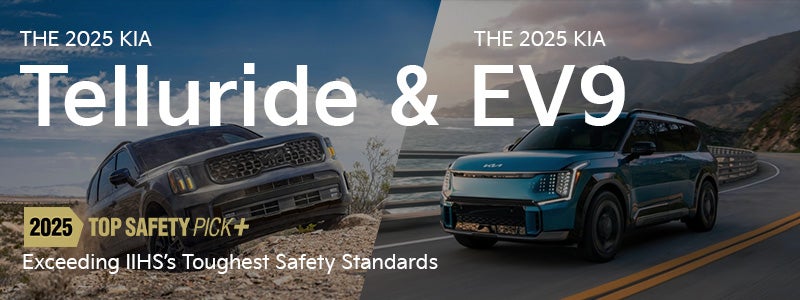
Telluride & EV9 Set the Standard with 2025 IIHS Top Safety Pick+ Awards | King Kia

At King Kia, we know safety is a top priority for our drivers in Gaithersburg, Rockville, and Germantown. That’s why we’re excited to share that the 2025 Kia Telluride and 2025 Kia EV9 have earned the Insurance Institute for Highway Safety’s (IIHS) highest honor— the Top Safety Pick+ (TSP+) award. This achievement highlights Kia’s dedication to safety, advanced technology, and top-tier engineering, ensuring you and your loved ones stay protected on every drive. Telluride: Three Years at the Top For the third year in a row, the Kia Telluride has earned the prestigious TSP+ rating, proving once again why it’s a leader in the midsize SUV segment. With a reputation for rugged capability, premium comfort, and advanced driver assistance features, the Telluride continues to be a top choice for families in Montgomery County and beyond. Advanced Driver Assistance Systems (ADAS) keep you aware of your surroundings. High-strength body structure enhances crash protection. Top-rated headlights provide superior visibility in all trims. Whether you're heading to Sugarloaf Mountain for a weekend adventure or tackling your daily commute on I-270, the Telluride delivers the confidence and security you need. EV9: All-Electric, All-Safe The 2025 Kia EV9 isn’t just making waves as an innovative, all-electric three-row SUV —it’s also setting new safety standards. This year, it earned an upgraded IIHS rating, securing a TSP+ designation for the first time. Ultra-rigid structure and reinforced safety cage for passenger protection. State-of-the-art collision prevention systems with pedestrian detection. Fast-charging capability, so you can power up quickly at charging stations across Maryland and D.C. If you're looking for an eco-friendly SUV that doesn’t compromise on performance, space, or safety, the EV9 is ready to impress. What It Takes to Earn IIHS Top Safety Pick+ The IIHS raised the bar for safety in 2025, with stricter crash test requirements, especially for rear-seat passenger protection. To earn the coveted TSP+ rating, a vehicle must: ✔ Score a “Good” rating in the updated moderate overlap front crash test (now including a backseat passenger dummy). ✔ Achieve top marks in small overlap front and updated side impact tests. ✔ Earn at least an “Acceptable” rating in pedestrian front crash prevention (day and night). ✔ Feature headlights rated “Acceptable” or “Good” across all trims. Both the Telluride and EV9 passed with flying colors, ensuring Kia remains a leader in automotive safety. Drive With Confidence at King Kia Looking for a safe, stylish, and tech-forward SUV? Whether you’re drawn to the rugged Telluride or the innovative EV9, you can feel secure knowing you’re driving one of the safest vehicles on the road. Visit King Kia at 953 N Frederick Ave, Gaithersburg, MD, to test drive the award-winning 2025 Telluride or EV9 today. Safety, performance, and innovation— Kia delivers it all.

BLOG_HEADER_4

King Kia’s Top 5 Driving Habits To Break | Gaithersburg, MD

It’s time to do some self-reflection! We know that most of you have been driving a car for years and years now. So, you’ve probably become pretty confident in your ability to operate a vehicle. But, are you practicing good driving habits when you're out on the road? Take a minute to think about it and check out King Kia’s top 5 driving habits to break below! And if you’re looking for a fresh start behind the wheel of a brand new ride, take a look at our large variety of New Kia Inventory and schedule a test drive with a member of our sales team today! King Kia’s Top 5 Driving Habits To Break: USING YOUR CELLPHONE. Trust us, we get the temptation! Especially when you hear that notification ping to let you know you've got a text, tweet, call, or whatever else! But, it’s an incredibly distracting practice to have your phone too close while driving. Opt to turn on airplane mode or use a hands free option if it is available for your vehicle. Eating while driving. Maybe you’re in a rush to get to work but still want to get three balanced meals a day. But, while grabbing food on the go may be convenient, it's another distraction that takes your full focus away from the road! Speeding You’re running late and traffic isn’t heavy - it’s easy to step on the pedal a little bit to make up some time. But did you know that in 2015, IIHS reported 27% of crash fatalities were related to speeding? In short, slow down and get there safely. Forgetting to turn on your headlights. Only needing your headlights at night is a habit to break. When weather conditions are poor or you’re traveling at dusk, turn them on. It’s important to make your presence known when you’re on the roadway. Slipping under the wire. You see the light turn yellow but are convinced you can make it, but you may want to air on the side of caution. Some drivers are ready to take off out the gate when they see a green light on their side of the intersection. Always try and take into account other more reckless drivers.

BLOG_HEADER_4

The Dangers Of Potholes And How They Can Seriously Damage Your Car | Gaithersburg, MD

The effects of winter weather on our roads becomes pretty apparent on those bumpy rides in the spring. But, some “bumps” are more serious than others. Potholes are usually caused through the expansions and contraction of groundwater. Water will seep into the cracks in the pavement, freeze and expand in the winter, and then thaw and leave gaps and voids in the pavement for more water to seep into and start the process all over again. Over time the structural integrity of the road is weakened and large chunks of pavement can become loose or displaced and potholes will form. Potholes come in various shapes and sizes and usually drivers only really avoid the big ones, but King Kia is here to tell you potholes are dangerous to drivers no matter their size. Below are some of the ways in which potholes can damage your vehicle. If you’re worried about the effects of your recent bumpy rides on your car, schedule a service appointment at the King Kia service center and our certified professionals will make sure your car is road ready. The Effects Of Potholes On Your Car: Wheel Misalignment This can happen when you hit one big pothole or overtime if you regularly drive on rough roads. Misalignment makes it harder to drive a straight course, puts undue stress on your suspension system, and impacts the lifespan of your tires as well. Shot Suspension System This system works to reduce the effects of driving over uneven or bumpy roads on your cabin and other driving components. It can get worn down over time or if abused by large sudden dips and make for unsafe driving conditions. Wheel and Rim Damage When your wheels come into contact with deep or jagged-edged potholes, rims can be dented and tires can get punctured or even blown out.

BLOG_HEADER_1

How To Tell If You Need New Brakes | Gaithersburg, MD

King Kia knows that it feels like all you do everyday is go, go, go. But, what happens when you need to stop? When was the last time you had your braking system checked? Brakes wear out gradually, so you may not notice if your ability to slow or stop begins to decline. Listed below are a few indicators that it’s time to give you brakes a break and get them checked out. And you can do so with King Kia’s diligently trained experts! We offer top notch car and truck brake repair at affordable prices at our facility here in Gaithersburg, MD. Your safety is our first priority. Make a service appointment with a King Kia maintenance professional today! Signs That You Need New Brakes: You hear a squealing noise when you brake. Most brake pads are manufactured with wear indicators. These metal tabs along the top of your brake pads will scrape against the rotors when the pads are worn down to a dangerous level; creating an awful noise as a result. Your car is taking longer to come to a complete stop. When your brake pads make contact with your rotor for extended periods of time, both components heat up and become worn, decreasing their ability to generate the friction needed to bring your car to a full stop in a timely manner. Your car is pulling to one side when you brake. This could indicate that the brake pads on one side of your vehicle are more worn out than the pads on the other side. This will cause your car to pull in one direction when stopping and puts stress on your steering rack. Your brakes vibrate or stutter when pressed. This issue arises when the binding resin holding the brake pads together is smeared across the rotor due to excessive heat and pad wear down. It is known as “glazing” and can be very dangerous if unchecked.

Your Guide To Car Care Tips For Any Season!

Servicing your vehicle isn’t just a once a year type of thing or an every once in a while habit. It’s a year-round task that you need to keep up with in order to keep your vehicle in great shape. We know - servicing your ride can be a daunting task and to me, it can be a big pain in the butt. We want to make that easier for you and your vehicle. This week we are sharing with you our guide on year-round services that you should stay on top of. Check it out below and don’t forget to check out our service and parts offers to save yourself some cash when you stop into service. Alright - let’s get started! 5 Year-Round Car Care Tips: Windshield Wipers - An easy and quick checkup can help keep your windshield wipers in great shape and will help you see when out on the road. Replace worn wiper blades and frames, and check on the rubber squeegee. Think about investing in wipers specifically designed for the current season you are in for the best results. Check The Fluids - No matter what type of fluid, you should be checking at the beginning of each new season. From your engine oil, windshield wiper fluid, coolant, brake fluid, and more - check them to see if they are full or need to be flushed out completely. Lighting - Winter is known for being dark but summer months can sometimes call for late night drives which means that you’ll need your headlights. If your headlights are dirty, dim, dying or none of the previous, it’s a smart choice to check up on your entire lighting system to ensure you’ll have no problems when you hop in when the roads are dark. Tires - Checking up on your tires is an easy and quick task that won’t have you wasting much time and won’t require extreme expertise in order to figure out. Simply check your tires to ensure that the tread is still in good shape and check the tire’s PSI. If you’re not sure how to do this, give us a call or stop in to see us for help. Battery - Extreme temperatures are known for killing a battery and if you can’t remember the last time you had your battery tested, it’s probably time. Whether you’re ready to have your battery tested or replaced altogether, it’s a good idea to check up on your battery more than once in a while. A simple service check-up can keep your vehicle from dying on the side of the road. Service With Us Year-Round & Save!

Rising Waters: Don’t Drive In A Flood. Here’s Why!

During the fall, we may come across a few rain showers that may lead to flooding. If you live in an area that floods often, you probably know the tricks to drive through a flood. The number one trick is don’t. Things often go wrong when trying to drive through flooding waters and risking your safety is not an option for us. This week, we have your guide on what to do when flood waters are rising and how to avoid potentially dangerous situations. You should always try to avoid driving through a flood for numerous reasons. Moving water can easily sweep your vehicle off the road or even worse, flip your vehicle upside down. Flooded areas are often times deeper than what they may appear to be. Steering clear of flooded areas will help keep you out of harm’s way and will not leave you stranded. Standing water should also be a no-no. Same as above, standing water can be misjudged and can lead to a dangerous situation if you try to drive through a “puddle” that is a lot deeper than originally thought. If you are forced to drive through standing water, try to get onto as much land as you can, let other vehicles pass by you first, drive slow and steadily to ensure you are not creating a bow wave. Once you’ve safely made it through, test your brakes to ensure that they are properly working. Go slow. When passing through any size of water on the roadway, go slow and take your time. Driving through water at fast speeds can potentially lead to a collision. You may lose contact with the road or lose steering control if you don’t take your time and go slow. To avoid this, slow down and if you feel yourself losing control, hold the steering wheel steady and slowly lift off your gas pedal until your tires regain contact with the roadway. Keep an eye out for hazards that may create dangerous situations. Look for manhole covers that can get lifted and moved in a flood, curbs can get lost and can do damage to wheels and tires if hit. Also, assume that water is contaminated and you may come across debris or harmful substances. Be alert and stay safe. Stay Safe In A New Kia!

When Should You Use Your Hazards?

We have all seen that tiny button on out dashboard, you know the one I'm talking about the red triangles, the one we never seem to need. Yeah, that one! Well, it’s not uncommon to know that this is your hazard button, but some people don’t know and that’s why I’m here, to drop some knowledge on you guys! The scientific definition for your hazards is that Hazard warning lights are a pair of intermittent flashing indicator lights that flash in unison to warn other drivers that the vehicle is a temporary obstruction. Aka they are those orangey-yellow lights that flash on and off when you or someone else is parked on the side of the road...see, knowledge! So where am I going with this...well hazards are not something you use in your everyday routine so I thought why not brush up on hazards so when you do need to use them you’ll be golden! What are hazard lights? Flashing lights used to bring attention to your vehicle for various reasons They are also called hazard flashers and hazard lights They are usually activated by pressing a button on the dashboard that looks like a red triangle Some cars might even active the hazards automatically in a crash When Should You Use Hazards? They are to warn other road users that you are a temporary hazard If you have broken down on the side of the road, you are changing a tire, or you are being towed When Shouldn’t You Use Hazards? When driving in traffic They should not be used when have parked illegally Leaving your hazards on while driving is unsafe because it overrides all other directions, like turn signals Need a service? Let us do it!

Car Seat Mistakes And Solutions

Do you have kids? If the answer is yes, then congratulations! Kids are great! Next question: do you have a car? If that answer is also yes, then you may want to keep reading this blog. There are a lot of car seat mistakes that parents make, and wouldn’t it be great to know that you’re not making them? Keep your precious cargo safer than ever by following these simple tips. The best part is that they’re all free! Your car seat might not be installed tightly enough. The seat shouldn’t move more than one inch in any direction when you try to jiggle it. If it moves more than that, tighten it up! On that note, your child’s harness straps might also be too loose. We don’t want to hurt our kids, but an accident hurts more than the car seat. The harness straps should be tight enough that you cannot pinch any slack between your thumb and pointer finger. How old was your child when you switched them to a forward facing seat? Or, how old will they have to be for you to make the change? A lot of parents make the switch too early - children should face the rear until they’re at least 1 year old and weigh 20 pounds, but the longer they can fit comfortably in the rear-facing seat, the better. When it comes to the car seat, make sure that the angle is correct. It should be reclined enough that your kid doesn’t fall forward out of the seat when they are sitting up, but it can’t be more reclined than 45º from vertical. While you’re inspecting the seat itself, make sure that the harness straps are in the correct position. In a rear-facing seat, the straps should come out of slots that are at the same level as, or just below, your child’s shoulders. When they are in a forward-facing seat, the straps should come out of the uppermost slots, unless the directions on the car seat say something different. The harness retainer clip could also be in the wrong place. It should be at armpit level on your child. The locking clip should also be positioned no more than one inch from the safety belt latch. On the subject of the safety belt, make sure it’s in locked mode. How do you get it into locked mode? Check your owner’s manual! It will tell you what type of seatbelts you have, and how to use them with your child safety restraint. It’s not hard to make sure that your child is safe and sound in the car, and the best part is that you don’t need a crazy fancy, high-tech car seat that more closely resembles a rocket ship or a kid-sized computer. All you need is to make sure that the seat is in the right spot, totally secured, and that your child is also secured safely and comfortably. Good luck! Find The Best Car For The Kids!

Work Zone Driving Basics

The weather is warming up and those winter potholes are getting bigger by the day. What does that mean? Construction season is nearly upon us! When you’re driving down the road, the chance is getting more and more likely that you’ll come across some folks improving our infrastructure, and you’ll need to drive extra safely around them. Not just because of the laws surrounding driving in a construction zone - but because there are people in the road and you just need to have the common courtesy to drive carefully! Here are our tips on driving safely in a work zone! Pay attention to the road. Don’t be distracted by things on the road or in your car, like your music or passengers. Make sure that all of your attention is on the road and the signs, as well as any traffic pattern changes or sudden stops in front of you. Make sure your headlights are on! Watch the other cars on the road with you - other drivers can be unpredictable, so you should be prepared for anything to happen. Merge when and where you should. Don’t wait until the last minute - this can be dangerous and puts you at a high risk of getting into a collision. Don’t tailgate other cars. Work zones should also be called “sudden stop” zones because people are definitely more liberal with the brakes than they would be elsewhere. Watch for speed limit signs and obey them. The speed limit can change several times, and if you get caught speeding through a work zone, the fines can be steep. Only change lanes when it’s safe to do so. I don’t know if you’ve gotten this part yet, but other drivers in work zones are unpredictable juggernauts. If you see a worker with a flag, follow their instructions. Have patience, not only with yourself but with other drivers and the workers on the road. You need to get to where you’re going, sure, but it’s better to be a little late and safe than never get there at all. Expect anything, because anything could happen. New Kia? Yes Please!

Keep Kids Alive, Drive 25 (Or You Know, The Speed Limit)

I live out in the boondocks, and I like it that way. What I’m not super fond of is when people race through the back roads by my house like they’re trying out for NASCAR. The roads aren’t super busy, so for them, it seems to be the perfect place to drive a little recklessly. The trouble here is that even though I’m out in the boonies, there are still a fair number of children out here that live on this road and others near here. And if nothing else, these kids racing around could get hurt themselves! So, in response, a few of us in the neighborhood have decided to get a group together to talk to town hall to see if there was a way to get people to slow down. Our local government decided that speed humps (not speed bumps) were the best option for our town. If you don’t know what a speed hump is it’s basically the appropriate traffic calming device for residential streets. Modern humps are made from recycled rubber and sold as individual segments for a "custom fit." For our street, this has worked so far. If you find that your streets are plagued by speed demons, these are the steps to follow to make your roads a bit safer: Step #1: Talk to Your Neighbors Step #2: Research Your City's Procedure Step #3: Hold A Meeting and Determine Plan of Action Step #4: Contact Local Officials Step #5: Define the Problem Step #6: Determine if a Speed Hump is the Right Solution Step #7: Present Your Case Step #8: Follow Up You are able to make a difference in your town and communities. All it takes is the wherewithal to go and do it. Knowing how your local governments work, and especially who your elected officials are that can make these things happen. So get together with your neighbors, come up with a plan and make your town a safe place for your kids, and your neighbors' kids to live. Drive Safer In A King Kia Today

Road Rage Tips & Tricks!

When we’re on the road, one of the constants that we almost always see is someone else who is experiencing road rage. Thankfully, there are a lot of great tactics that not only minimize the danger to you from a road raging driver, but that also help keep you calm so you don’t catch the bug. Check them out! If you’re being tailgated, at the first opportunity you have, let them pass you safely. If they need encouragement, wave them along. Only move over for them if it is safe to do so. When you leave for work in the morning or leave work for home, always plan for delays on your trip. You never know what kind of a morning other drivers are having, and it’s better to be early than late and angry! Be safe on the road. Really focus on driving safely! If you are concentrating on the road and only the road, then you’re much more likely to drive responsibly. So put down the phone, don’t fiddle with the music… focus on the road! If you are prone to road rage, try having soothing background music or even quiet talk radio playing in the car. This can actually make a difference in your calmness level! Don’t rely on your horn. If you have a tendency to honk at everyone, consider… not doing that. It not only makes other drivers angry, but can make you angry as well. Finally, if you’re doing fine but you encounter someone else who is very clearly road raging, let them get past you and don’t give them any trouble. They can go be angry elsewhere - don’t let them jeopardize your safety! Stay Safe In A Great New Sportage!

Defensive Driving 101… Again

Reach back into the deep crevices of your brain… back all the way to when you were 16 years old and taking Driver’s Ed class. Remember that? Now think… do you remember learning about defensive driving? Sure, we all remember the name of it, but what it actually entails? Ha, ha! Well, not so ha-ha, because it’s important to know. This is why we have put together this easy guide to defensive driving that even a grownup can understand. Check it out: If you have someone tailgating you, let them pass whenever it’s safe to do so. Wave them onward if they need a little bit of help. Always plan for delays in your journey. As pessimistic as it sounds, never trust other drivers. They get into accidents and forget how to drive all the time. If you plan for delays, the best outcomes are that you either arrive to your destination early, or if you hit traffic you won’t be late. Win-win! Focus on safety. When you’re thinking the most about being safe and driving the way you’re supposed to, you’ll drive more responsibly. So, put down that cellphone! If you begin your journey stressed, it’s just going to get worse with every little thing that happens on the way. Listen to soothing music or talk radio, take deep breaths, and remember that you are not in the car forever! Addicted to the horn? Time to wean yourself off. Using your horn makes you angry and it makes everyone else around you angry, and then you have a Dangerous Driving Situation on your hands. That is never good. If you come across another driver who is road raging, stay as far away from them as possible. Let them pass you, don’t cut them off, just let them leave you the heck alone. It’s for the best! Drive Safely With Kia UVO eServices

Contact Us

Fill out this form below and we'll contact you shortly
*Required Fields